

Read the full feature in Nature.
At-home microbiome tests promise personalized health insights, but how much can consumers learn from the results? A Nature News Feature published on November 18, 2026, examines the science behind this growing market, drawing on the expertise of Jacques Ravel, director of the Center for Advanced Microbiome Research and Innovation (CAMRI) at the University of Maryland School of Medicine.
The feature, “Microbiome home tests are taking off. Can they be trusted?”, explores why commercial tests can produce conflicting assessments and why translating microbial profiles into reliable health advice remains a challenge. Ravel contributes a critical perspective on three central issues: the lack of standardized testing methods, the limitations of evidence based on correlations, and the risks of applying a narrow definition of a healthy microbiome to diverse populations.
Different tests, different answers
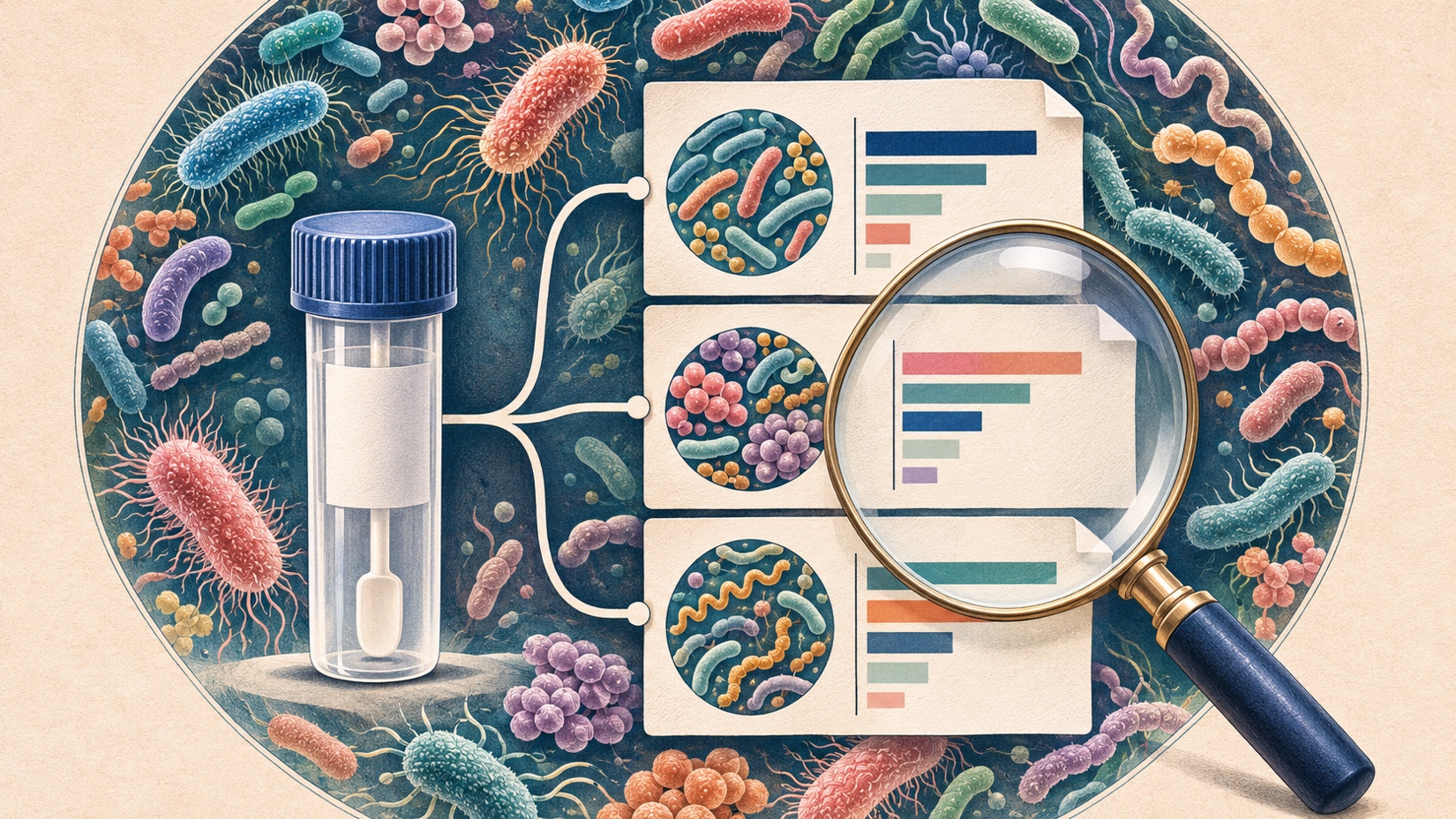
The article describes studies in which companies received samples from the same stool specimen yet reported substantially different microbial profiles and health assessments. Ravel, a co-author of one of the studies examining commercial providers, highlights the need for standards in an industry where differences in sample processing, sequencing, and analysis can influence results.
These discrepancies matter because consumers may use the reports to change their diets or purchase supplements. Identifying microbes is one step, but demonstrating that a recommendation based on those findings improves health requires additional evidence beyond associative studies.
Defining health requires context
Drawing on his research on the vaginal microbiota, Ravel also challenges the assumption that a single microbial profile can serve as a universal benchmark for health.
Although vaginal communities dominated by Lactobacillus are commonly used as a reference for health, many Black women with low levels of these bacteria do not have disease. Ravel emphasizes the harm that can arise when microbial differences are interpreted as evidence of ill health without sufficient clinical context.
His contribution underscores a broader challenge for microbiome testing: reference populations and the criteria used to interpret results must account for human diversity.
Moving from association to clinical benefit
Ravel further emphasizes that much microbiome research identifies associations between microbes and health conditions. Those findings can generate valuable hypotheses, but they do not, on their own, establish that changing the microbiome through diet, probiotics, or supplements will improve health.
The feature presents a field with considerable promise alongside important unresolved questions. Ravel’s contributions emphasize what responsible progress requires: reliable measurements, interpretation grounded in diverse populations, and studies that demonstrate meaningful health benefits.