

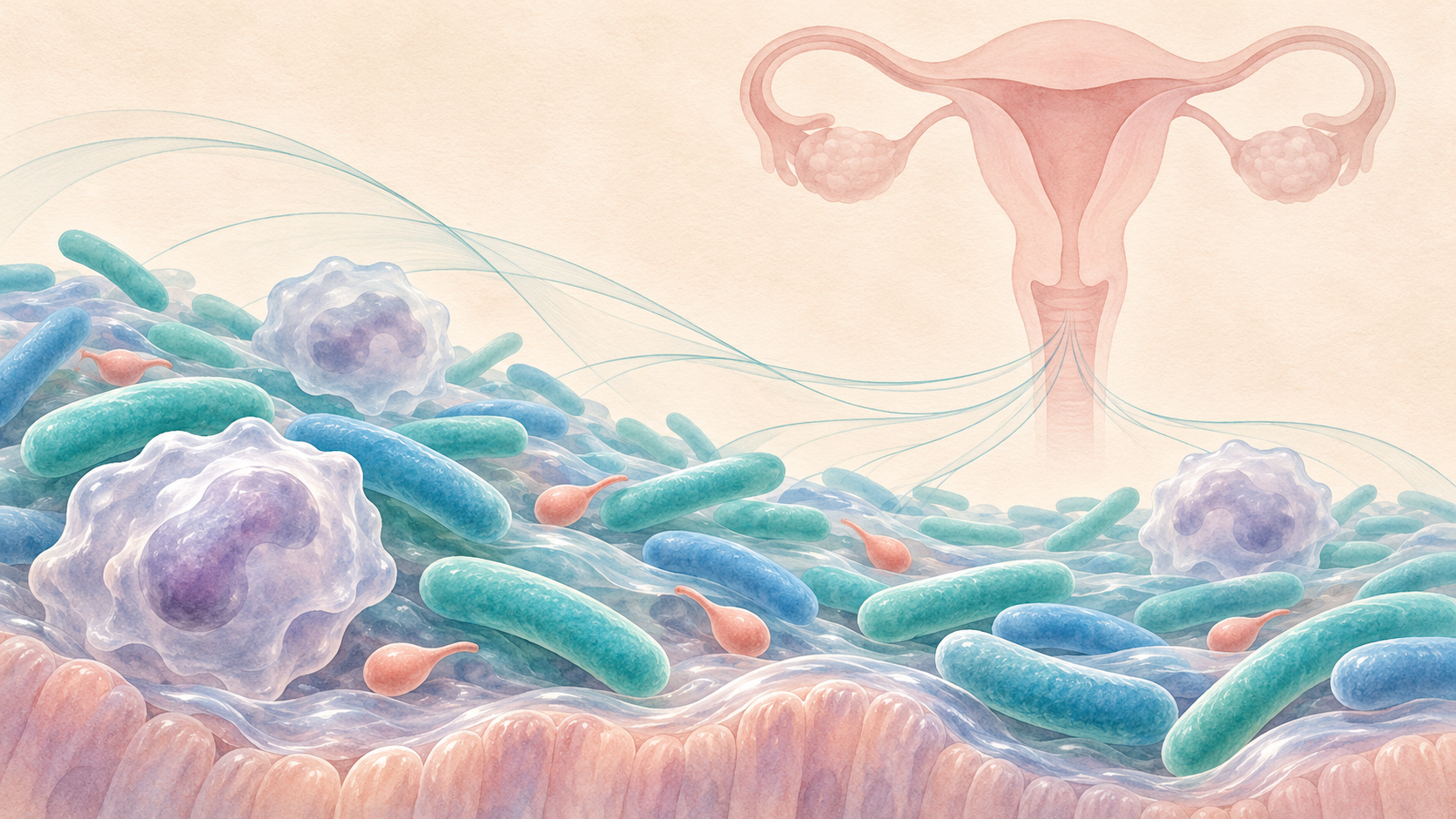
The 5-year project will examine how Mycoplasma genitalium infections persist, resolve, and contribute to reproductive health complications.
Rebecca M. Brotman, PhD, MPH at the Center for Advanced Microbiome Research and Innovation (CAMRI), has received a new National Institutes of Health R01 grant to address critical questions about Mycoplasma genitalium (MG), an emerging sexually transmitted infection that is increasingly difficult to treat because of antibiotic resistance.
The project, “Mycoplasma genitalium in Women: Natural History, Clinical Sequelae, and Host-Microbiome-Mediated Clearance,” will investigate how MG infections develop over time, their relationship to reproductive tract inflammation and disease, and whether the vaginal microbiome and immune response influence the body’s ability to clear infection.
MG has been linked to cervicitis, or inflammation of the cervix, and pelvic inflammatory disease (PID), which can have serious consequences for fertility and reproductive health. Yet important questions remain: How often do infections without symptoms resolve on their own? How often do infections progress to disease? How much of the harm comes from MG itself, rather than from other infections or vaginal microbiome conditions that often occur alongside it?
To investigate these questions, Brotman and her team will draw on the NIH Longitudinal Study of Vaginal Flora (LSVF), a cohort of 3,620 women followed quarterly for one year. The study’s repository includes 13,339 archived cervicovaginal samples, alongside detailed behavioral questionnaires, symptom assessments, and clinical examinations. Collected before commercial MG tests became available, these resources offer a rare opportunity to examine infections that were not identified and treated specifically for MG.
The team will identify factors associated with infection, evaluate MG’s relationship to vaginitis, cervicitis, and PID while accounting for other infections and conditions, and investigate microbial and immune factors associated with spontaneous clearance.
A central focus is whether vaginal communities dominated by Lactobacillus help support MG clearance, as the team previously found for chlamydia. The researchers will also examine whether metronidazole use is associated with clearance, potentially through changes in bacteria associated with bacterial vaginosis and restoration of Lactobacillus.
By clarifying when MG persists, when it resolves, and how it relates to disease, the project aims to strengthen the evidence guiding future testing, treatment, and prevention strategies. It will also advance CAMRI’s research into how interactions between the microbiome and the host shape reproductive health.
For the project, Brotman leads a team of long-standing collaborators, including Jacques Ravel, Michael France, Xin He, Andrew Macintyre, Susan Tuddenham, and Khalil Ghanem, who bring together expertise in genomics, epidemiology, statistics, immunology,and clinical medicine and have co-authored more than 75 studies with her over two decades.
NIH project number: R01AI201678
Contact principal investigator: Rebecca M. Brotman, PhD, MPH